%2520Main%2520Banner%25201600x1000.webp)

Artículo
May 22, 2026
Líneas de pago en las tragaperras: cómo funcionan y generan premios

Las líneas de pago son un elemento fundamental en muchas tragaperras. Tradicionalmente, las tragaperras tenían una única línea de pago y, a medida que evolucionaron, se definieron por su número de líneas. Hoy en día, las líneas de pago de las tragaperras alcanzan cifras de seis dígitos, y los desarrollos únicos en este ámbito han dado lugar a algunas de las mecánicas más fascinantes del sector.
Entonces, ¿por qué son tan importantes las líneas de pago y cómo funcionan?
¿Qué es una línea de pago en una tragaperras?
¿Qué es exactamente una línea de pago? Es una línea fija sencilla que va desde el primer rodillo hasta el último. Para obtener un premio, los jugadores deben conseguir combinaciones ganadoras a lo largo de esta línea.
Como ejemplo, piense en una tragaperras sencilla de 3 carretes y una sola línea de pago. Comunes en los inicios de las tragaperras, estos juegos presentaban tres símbolos en cada rodillo. Sin embargo, solo importaban los símbolos de la fila central, ya que ahí era donde solía encontrarse la línea de pago.
Si obtenía un símbolo coincidente en la posición central de todos los carretes, ganaba; si esa coincidencia aparecía por encima o por debajo, pero no en el centro, no ganaba.
A medida que las tragaperras mejoraron y los desarrolladores experimentaron con cuadrículas más grandes y sistemas más complejos, las líneas de pago pasaron de ser una simple trayectoria horizontal a múltiples líneas horizontales, diagonales y en zigzag.
Formatos como "All Ways" llevan esto un paso más allá. Lucky Honey, por ejemplo, tiene 256 formas de ganar en una cuadrícula de 4x4. Forma estas líneas de pago creando premios cada vez que aparecen símbolos iguales en al menos los tres primeros carretes consecutivos. Se utilizan sistemas similares para crear 1.024 formas de ganar, como en Very Lucky 1024.
Cómo funcionan las líneas de pago
Para entender mejor las líneas de pago en las tragaperras, consideremos Wish and Spin Fortune, que cuenta con 243 formas de ganar y una temática de Las mil y una noches.
Los símbolos pagan por combinaciones de 3, 4 y 5. Por lo tanto, si un símbolo de camello sigue a 2 símbolos de genio, no genera un premio. Incluso si hay genios en los carretes 2 al 5 y un camello en el rodillo 1, no hay premio, ya que una línea de pago comienza desde el primer rodillo.
Sin embargo, un genio en el primer, segundo y tercer rodillo activará una ganancia.
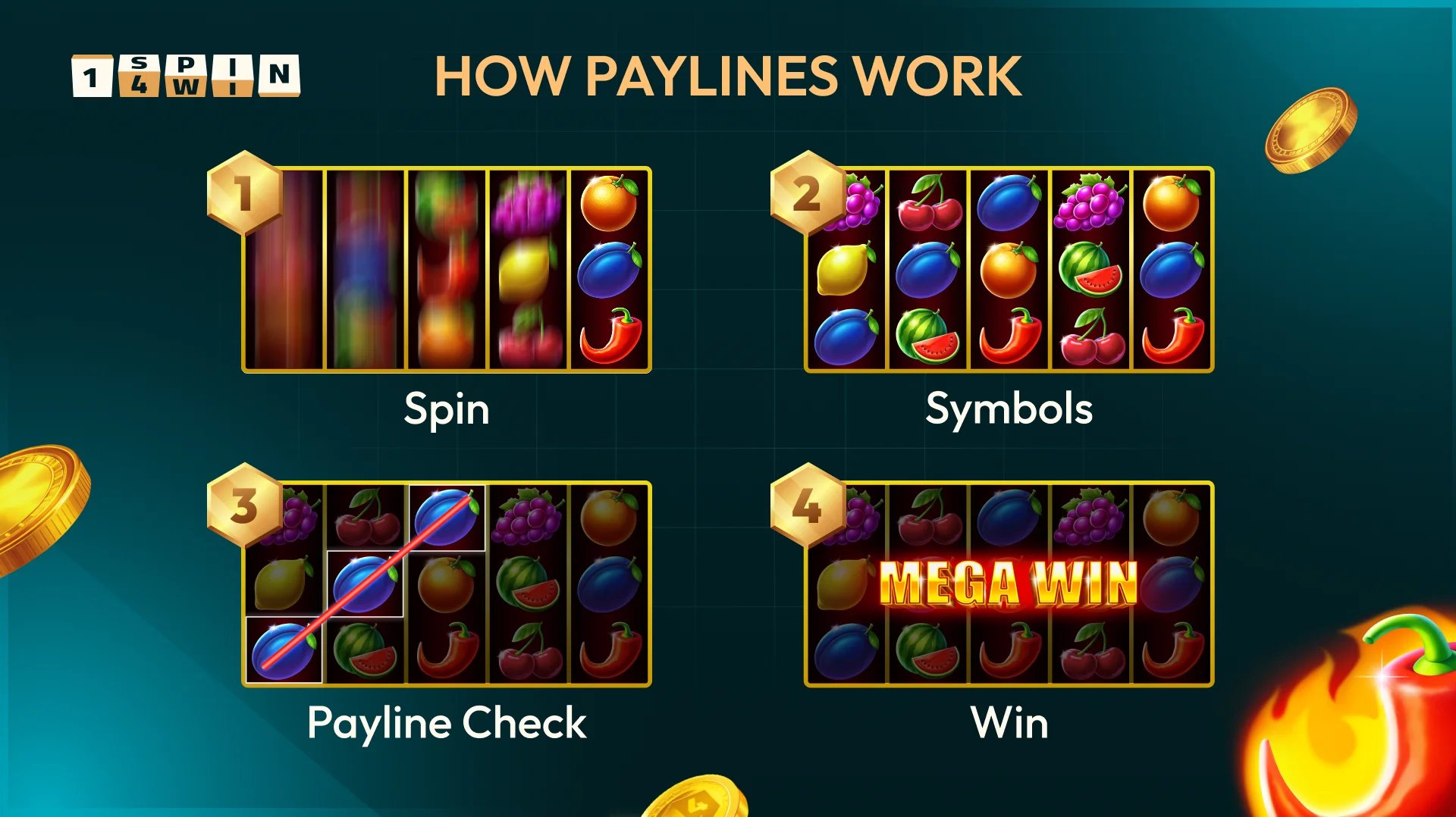
Un generador de números aleatorios (RNG) determina dónde aparecen los símbolos en la cuadrícula. Ejecuta constantemente una secuencia de números y, cuando el jugador gira, se detiene en uno de ellos, asigna un resultado y se establece en consecuencia.
La cantidad que otorga una línea de pago viene determinada por los símbolos y no por la línea en sí. En este caso, el genio es el segundo símbolo que mejor paga, por lo que otorga más que el camello, que es el cuarto, independientemente de la línea de pago.
La mayoría de las tragaperras pagan por combinaciones de al menos 3 símbolos, con un límite que corresponde al número total de carretes. Hay 5 carretes en Wish and Spin Fortune, por lo que los jugadores obtienen premios por combinaciones de 3, 4 y 5, y como juegos de tragaperras online generalmente solo pagan por la combinación más alta, recibirán un único pago por esa línea de pago, independientemente del número total de coincidencias.
Las líneas de pago son fundamentales en el conjunto de reglas. En muchos casos, generan la mayoría —y a menudo todos— los premios en el juego base.
Cómo se distribuyen las líneas de pago
La idea de una estructura de líneas de pago “tradicional” prácticamente desapareció con la llegada de las tragaperras online de juego instantáneo. Fue entonces cuando empezamos a ver a los desarrolladores experimentar con estructuras únicas. Hoy en día, los proveedores de tragaperras añaden diversas mecánicas originales que cambian la dinámica, ya sea el mencionado sistema “All Ways” o funciones como los pagos por grupos (cluster pays) y Megaways.
Aun así, la mayoría de las tragaperras siguen estructuras clásicas e incluyen los siguientes tipos de líneas de pago:
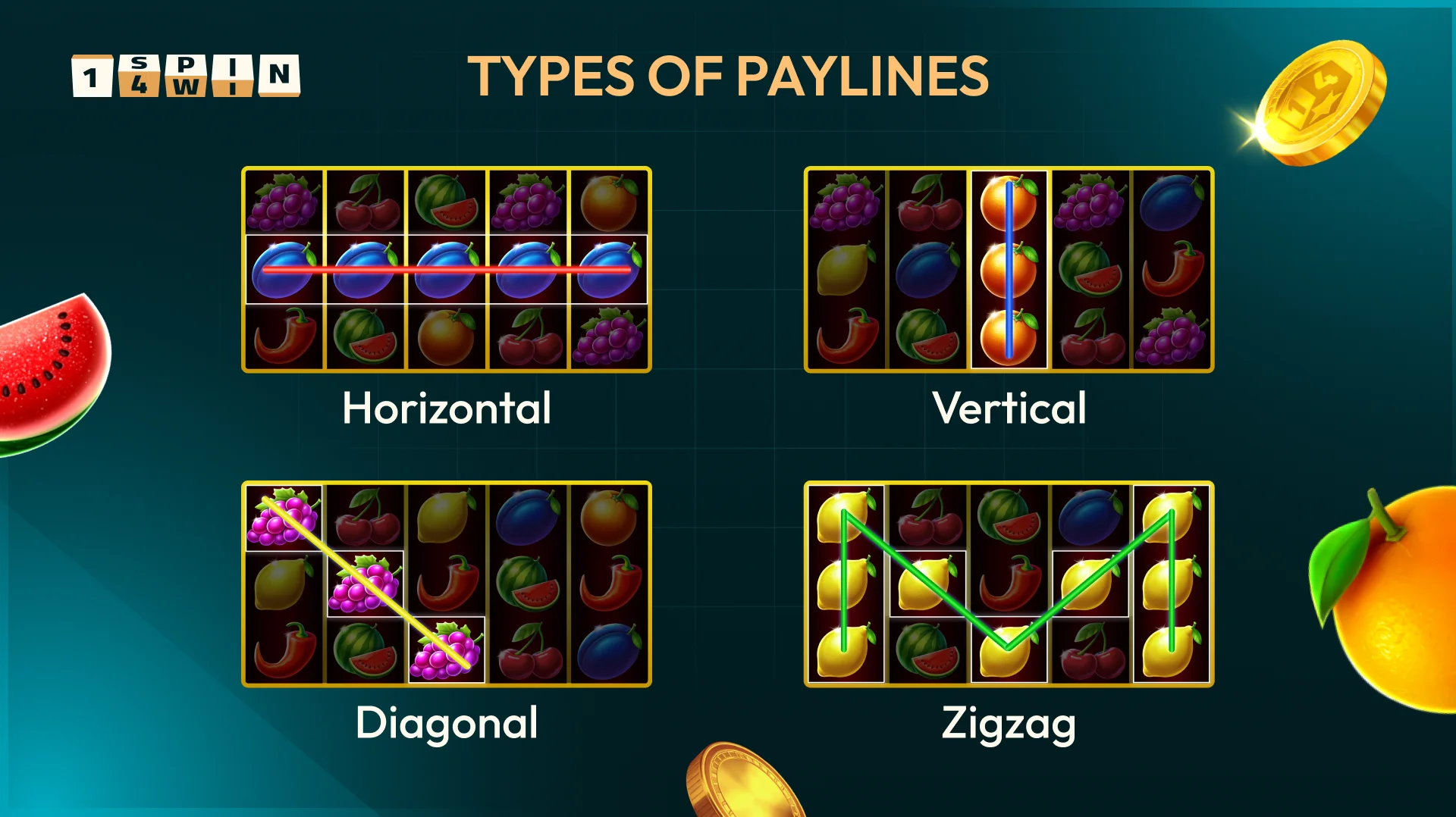
Líneas de pago horizontales
El tipo más común de línea de pago; las líneas horizontales trazan un camino directo de un lado a otro de la cuadrícula. Independientemente de cuántas líneas de pago tenga una tragaperras, casi siempre comenzará con líneas horizontales que cubren cada fila. La mayoría van de izquierda a derecha, pero las tragaperras con pagos en “ambos sentidos” también pagan de derecha a izquierda.
Líneas de pago verticales
Las líneas de pago verticales son poco comunes, ya que cubrirían un solo carrete en las tragaperras clásicas. Es más habitual verlas en juegos con diseños de cuadrícula o estructuras de líneas de pago únicas, como los pagos por grupos, que premian los símbolos que se “agrupan” horizontal y verticalmente.
Líneas de pago diagonales
Después de cubrir las horizontales, la mayoría de las estructuras de líneas de pago pasan a las diagonales. Si una tragaperras clásica de 5x3 tiene más de 10 líneas de pago, es probable que incluya diagonales, como la que va desde la primera posición superior izquierda hasta la última posición superior derecha.
Líneas de pago en zigzag
Las líneas de pago en zigzag son aquellas que siguen trayectorias no lineales. Incluyen juegos con formatos “All Ways” y “Ways to Win”, así como juegos de líneas de pago fijas con un alto número de líneas. Por ejemplo, pueden incluir el símbolo en la primera fila y primer carrete, seguido del símbolo en la segunda fila y segundo carrete, y luego la primera fila y tercer carrete.
Líneas de pago fijas y ajustables: diferencias
La mayoría de las tragaperras tienen líneas de pago fijas, lo que significa que cada giro tiene el mismo número de líneas. Con Lucky Easter 27 Hold and Win, sin importar si los jugadores apuestan poco o mucho, y sin importar cómo aborden cada giro, siempre habrá 27 líneas de pago.
En las tragaperras con líneas de pago ajustables, los jugadores pueden elegir cuántas líneas activar. Estos juegos suelen tener apuestas por línea, en lugar de por giro, por lo que los jugadores pueden reducir las líneas de pago para bajar la apuesta total manteniendo la misma apuesta por línea.
Los activadores de bonificación pueden variar en los juegos con líneas de pago ajustables. Por lo general, en una tragaperras de línea de pago fija, los símbolos scatter pueden aparecer en cualquier parte de los carretes y activarán una bonificación o un pago cuando aparezca un número determinado. Un juego con líneas de pago ajustables puede requerir que estos símbolos aparezcan en líneas activas, lo que incentiva a los jugadores a jugar más líneas.
Las líneas de pago ajustables añaden variedad y flexibilidad, pero la mayoría de los jugadores siguen prefiriendo jugar con todas las líneas de pago activas.
Líneas de pago de las tragaperras y tipos específicos de juegos
Las tragaperras pueden definirse por todo, desde sus gráficos (tragaperras 3D) hasta su compatibilidad (tragaperras móviles) y su estilo. Los símbolos de frutas y el estilo retro significan que Classic Chilli 100 es una tragaperras clásica, mientras que la función que da nombre a Lucky Arena Hold and Win la convierte en una tragaperras de tipo Hold and Win.
Sin embargo, a menudo todo gira en torno a las líneas de pago.
Al principio, las tragaperras tenían una sola línea en el centro. En las décadas siguientes, evolucionaron de las clásicas tragaperras de una sola línea a las tragaperras de video con entre 5 y 40 líneas de pago. Durante la era online, el formato de tragaperras de 5 carretes se convirtió en la norma, y vimos más juegos con 243 y 1024 formas de ganar.
Los desarrolladores utilizan el término "formas" para definir estas líneas de pago, ya que funcionan de forma un poco diferente a las líneas de pago estándar. Mientras que las líneas de pago fijas trazan rutas rígidas y predefinidas de un lado a otro de la cuadrícula, una "forma de ganar" simplemente paga por símbolos consecutivos en un número mínimo de carretes.
En la última década, aproximadamente, hemos visto el lanzamiento de mecánicas únicas que añaden miles e incluso decenas de miles de líneas de pago. Megaways es un excelente ejemplo, ya que aleatoriza las filas para crear desde unas pocas docenas hasta más de 100,000 líneas de pago en cada giro.
Mecánicas de pago alternativas
Como se mencionó anteriormente, los desarrolladores se han vuelto muy experimentales a lo largo de los años. Esos experimentos han dado lugar a grandes evoluciones en las funciones de bonificación, incluidas funciones especiales como Hold and Win, presentes en tragaperras como Classic Chilli Hold and Win y Lucky 1spin4win Hold and Win.
Pero las innovaciones también se han centrado en las estructuras de las líneas de pago. Tragaperras Megaways son quizás el ejemplo más conocido, pero existen otros:
Pagos por grupos o Cluster Pays
Los pagos por grupos no utilizan líneas de pago tradicionales. En su lugar, activan premios siempre que aparece un "grupo" de símbolos en la cuadrícula. Un grupo suele ser un conjunto de símbolos conectados horizontal o verticalmente.
Estos juegos utilizan cuadrículas más grandes que las de las tragaperras con líneas de pago fijas y, a menudo, requieren combinaciones de al menos 5 símbolos. También es común ver mecánicas adicionales como los carretes en cascada, que eliminan los grupos ganadores y hacen caer nuevos símbolos en los espacios vacíos.
Pagos en cualquier posición o Pay Anywhere
En las tragaperras con líneas de pago fijas, cada combinación ganadora debe aparecer en una de las líneas activas. Sin embargo, los símbolos scatter (y algunos símbolos de bonificación) son la excepción, ya que pueden aparecer en cualquier parte de la cuadrícula. Las tragaperras con pago en cualquier lugar aplican este concepto a todos los símbolos. Siempre que aparezca el número requerido de símbolos, el juego otorga un premio.
Megaways
Desarrollado originalmente por Big Time Gaming y posteriormente licenciado a muchos otros estudios, Megaways es una mecánica de líneas de pago enormemente popular. Por lo general, utiliza 6 carretes y un sistema de "formas de ganar" que genera premios por todas las coincidencias consecutivas. Luego, aleatoriza las filas en cada giro, cambiando así el número total de líneas de pago.
Muchos juegos Megaways tienen hasta 117,649 líneas de pago, pero al añadir filas adicionales, pueden llegar a ser muchas más.
Tragaperras sin líneas de pago
Las líneas de pago no son un requisito indispensable en las tragaperras. Mega Cash Amplifier no contiene ninguna línea de pago. Funciona revelando monedas o espacios vacíos, donde los jugadores giran para obtener premios instantáneos o una función de bonificación sin las clásicas líneas de pago.
A menudo presentes en las tragaperras Hold and Win, estos juegos sin líneas de pago son cada vez más comunes a medida que crece la popularidad de esta función.
Líneas de pago cambiantes y progresivas
Estas tragaperras suelen comenzar con un número modesto de líneas de pago, que aumenta cuando los jugadores cumplen ciertos criterios. En las tragaperras con carretes en cascada, la cuadrícula y el número de líneas de pago pueden aumentar a medida que el jugador encadena victorias; en otros juegos, pueden pagar para desbloquear filas y carretes adicionales.
Significado de las líneas de pago en las tragaperras con bonificación
Las tragaperras con bonificación siguen utilizando líneas de pago, pero incorporan otras mecánicas que prescinden de ellas.
Ya hemos mencionado el papel que desempeñan los símbolos scatter y de bonificación en estos juegos. No necesitan aparecer en líneas de pago específicas y, a menudo, activan giros gratis y otras funciones. Sin embargo, las tragaperras también incluyen otros símbolos y funciones que interactúan con las líneas de pago de formas únicas:
Algunas tragaperras también incluyen funciones de carretes Wild, que funcionan como símbolos apilados pero aparecen como Wilds y cubren todo el carrete. Esta función puede aparecer solo si puede generar una victoria, lo que significa que debe caer en una línea de pago activa. No obstante, las reglas varían.
Cómo afectan las líneas de pago de las tragaperras al RTP y a la volatilidad
Las líneas de pago de una tragaperras no determinan el porcentaje de RTP, pero pueden influir en la frecuencia de aciertos y en el tamaño de los premios.
Los juegos de alta volatilidad suelen tener más líneas de pago, ya que necesitan crear muchas opciones de premio para dar cabida a esas posibilidades de grandes ganancias. Al fin y al cabo, si un juego solo tiene unas pocas líneas de pago y un puñado de símbolos, existe una alta probabilidad de obtener todos los resultados, lo que reduce la volatilidad.
Los jugadores tienden a sentirse atraídos por los juegos con más líneas de pago. Al mismo tiempo, sin embargo, buscan un RTP alto. Es un acto de equilibrio para los desarrolladores, pero uno que puede ser muy gratificante si logran dar con la tecla adecuada.
Lucky Legion Hold and Win es un gran ejemplo de cómo puede ser un buen equilibrio. Tiene 243 líneas de pago y un RTP alto del 97,1 %, pero también incluye una función Hold and Win y una volatilidad media.
Retro 432 Ways va un paso más allá, con un RTP del 97,4 %, 432 líneas de pago y una ganancia máxima de 4500x, todo ello envuelto en una atractiva estética retro.
Líneas de pago, participación y retención de jugadores en las tragaperras
Siempre habrá un grupo de jugadores que prefiera las tragaperras clásicas. Buscan estructuras sencillas, reglas familiares y temas nostálgicos. Pero para muchos, cuanto más grande, mejor, y eso empieza por un elevado número de líneas de pago.
Estos juegos son especialmente eficaces para atraer a los principiantes, pero ahí reside una advertencia importante. El juego no puede ser tan complicado que abrume al jugador. Más opciones significan más complicaciones y frustraciones para el recién llegado promedio. Ellos quieren girar los carretes sin preocuparse por reglas complejas.
Megaways logra un gran equilibrio entre un alto número de líneas de pago y la simplicidad. Todo depende del generador de números aleatorios (RNG), por lo que los jugadores solo tienen que girar y esperar. Los juegos de formas de ganar también son efectivos, ya que se explican por sí mismos.
Los juegos base activos y dinámicos con muchas líneas de pago mantienen el interés de los jugadores, quienes siempre buscan desbloquear esas grandes funciones y botes.
Los jugadores buscan una singularidad que trascienda la novedad pasajera. Una estructura de líneas de pago única puede atraerlos al principio, pero si carece de profundidad y no está respaldada por gráficos potentes, funciones y una buena jugabilidad, perderán el interés. Si una mecánica de líneas de pago es divertida, original y atractiva, tendrá la longevidad necesaria para mantener a los jugadores enganchados.
Mecánicas de líneas de pago en los juegos de 1spin4win
En 1spin4win, exploramos constantemente nuevas mecánicas de líneas de pago mientras perfeccionamos las existentes. Estas van desde tragaperras con menos de 40 líneas de pago, como Cash’n Fruits 27 hasta 243 formas de ganar, como Dolphin’s Wealth Win Spins, pasando por tragaperras con más de 1.000 líneas de pago, como Mega Cash’n Fruits.
Sabemos lo que funciona y lo que los jugadores buscan en la jugabilidad de las tragaperras, por eso ofrecemos una amplia gama que satisface todas sus necesidades.
Preguntas frecuentes
¿Qué son las líneas de pago en las tragaperras?
Son las trayectorias que atraviesan los carretes. Para obtener premios, los símbolos coincidentes deben aparecer alineados sobre ellas.
¿Por qué existen las líneas de pago en las tragaperras?
Establecen una estructura de pago definida que indica a los jugadores dónde deben aparecer las combinaciones ganadoras.
¿Qué determina lo que aparece en las líneas de pago de las tragaperras?
Los generadores de números aleatorios determinan la posición de los símbolos en cada línea de pago con cada giro.
¿Todas las tragaperras tienen las mismas líneas de pago?
No. Los desarrolladores tienen la libertad de implementar sus propias estructuras únicas.
¿Existe un límite para las líneas de pago?
Los juegos están limitados por el tamaño de su cuadrícula, pero como hemos visto con las tragaperras Megaways, aún pueden ofrecer más de 100,000 líneas.


noticias similares
noticias similares
últimas entrevistas




.webp.webp)
Suscríbase
Reciba nuevos estudios de casos e informes directamente en su bandeja de entrada

¡Uy! Algo salió mal al enviar el formulario.
.webp)
.webp)
¡Inspírate en los clásicos para que tu negocio sea atemporal!
Crea tragamonedas personalizadas que fortalezcan la participación y retención de los jugadores, así como el reconocimiento de tu marca de casino