
Article
August 19, 2026
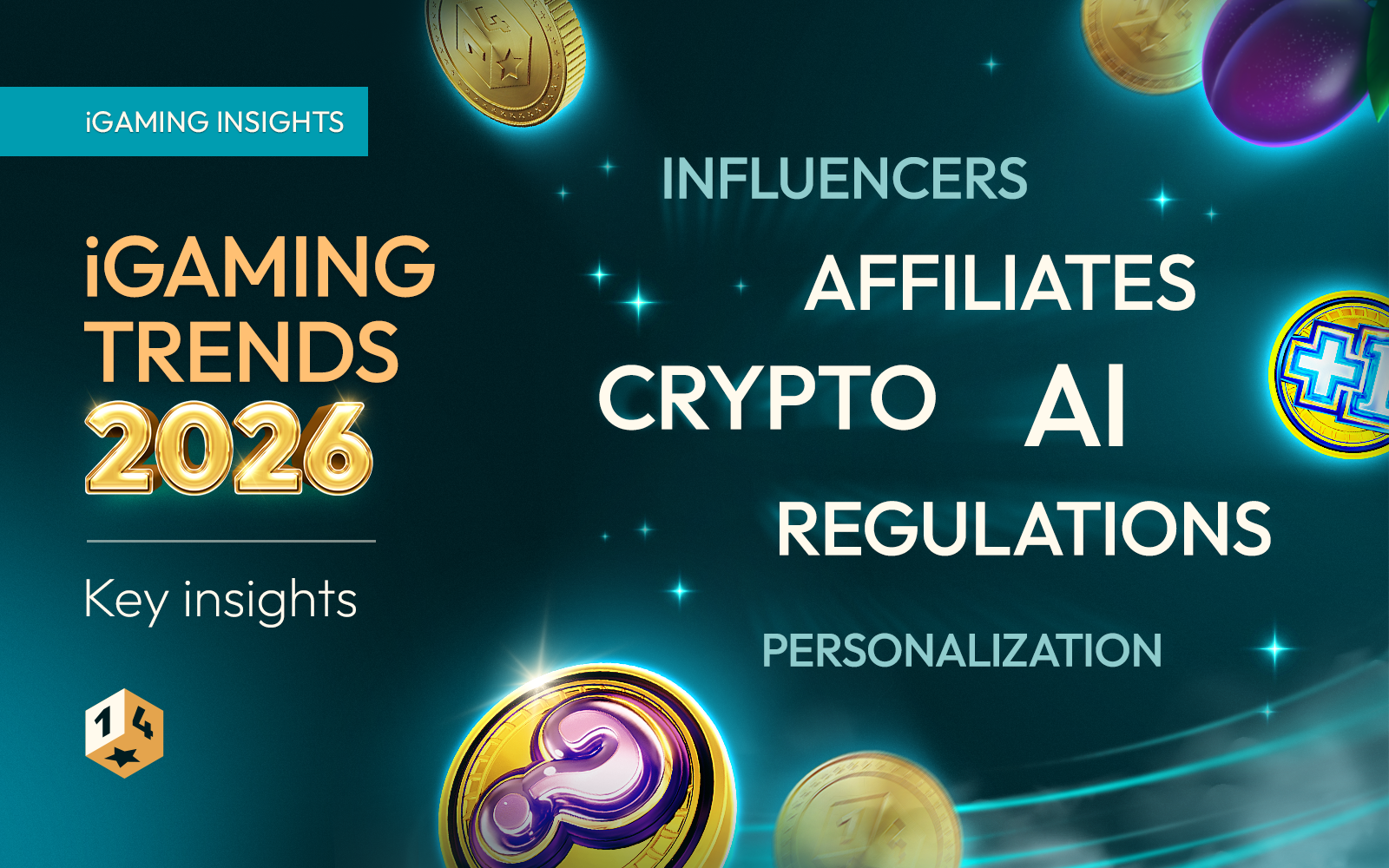
iGaming trends 2026: key market, tech & marketing insights


The iGaming sector continues to grow, and technological innovation has been a major catalyst in that growth. In 2026, we’ve seen various new iGaming industry trends that may take the sector in new and exciting directions, and it’s those iGaming trends we’ll look at in this guide.
Gaming industry trends 2026
The global iGaming sector is projected to be worth around $130 billion in 2026, up from just under $111 billion in 2025 for a compound annual growth rate (CAGR) above 17%. This rapid revenue growth is largely the result of relaxing regulations across major jurisdictions, as well as continued increases in iGaming penetration.
The US iGaming sector grew by over a quarter in 2025, while Latin America has seen a CAGR of 26%. In Asia, the CAGR is expected to be around 12.1% over the next few years, with experts predicting over 50% growth in the African online betting market between now and 2030.
So, while iGaming trends for 2026 seem to point to stricter controls in key regulated markets like the UK, Australia, and across Northern Europe, casinos are finding new and exciting opportunities in LatAm and the United States, as well as across Africa and Asia.
Major macrotrends include an increasing adoption of AI for compliance and fraud protection, as well as an increased market size due to relaxing regulations in highly populated countries like the US and Brazil.
Microtrends point more toward changes in advertising, including segmentation strategies combined with email/text marketing, affiliate marketing, social media marketing, and influencer marketing, as discussed later in this guide to iGaming market trends.
<H3>iGaming market trends and challenges in emerging markets</H3>
iGaming industry trends point to higher player numbers and rising revenue in most jurisdictions around the world. But player preferences and local regulations mean the industry can look very different from one region to the next.
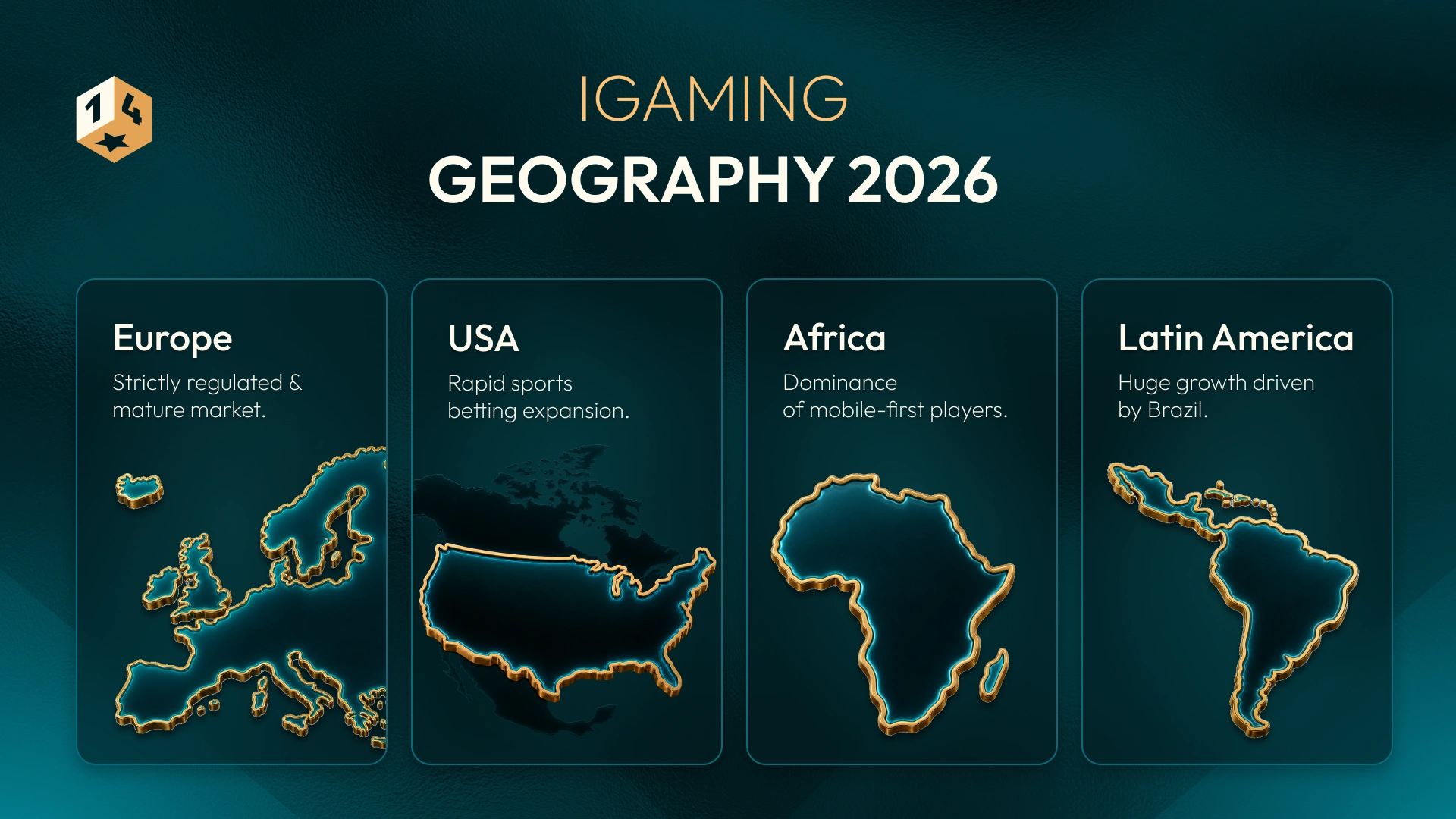
Africa’s iGaming sector, for example, is dominated by mobile-first bettors, while in the United States, sports betting rules the industry.
Here’s a quick comparison of global iGaming trends for 2026:
The regulatory landscape of the online gambling industry
Regulations have a massive impact on the online gambling industry, arguably more than player trends. With one sweeping reform, regulators can drastically change the industry’s profitability and even cause many operators to exit certain regulated markets.
In the United Kingdom, for example, recent iGaming market trends have moved toward safer and more responsible gaming, forcing regulators to change everything from the waiting times between slot spins to the amount that players can wager. In 2026, regulators also announced that online gamblers betting more than £1,000 in 24 hours would face new checks, with lower thresholds for players under the age of 25.
The regulatory landscape in Europe and North America has also focused heavily on anti-money laundering practices, making strict AML checks and player verifications an essential licensing requirement for casino operators.
A new era of marketing in the iGaming sector
In recent years, the iGaming marketing landscape has changed considerably. In the UK, the government has repeatedly discussed clamping down on gambling advertisements in sport. In 2025, Premier League clubs agreed to withdraw gambling sponsors from the front of official shirts, and while that still allowed for sponsors to be placed on backs and shirt sleeves, the government has since announced a crackdown on additional placements covering brands not licensed in the UK.
Major online companies have also implemented strict controls. Google Ads doesn’t allow gambling companies to remarket ads based on gambling interests. Meta also requires certification, and restricts gambling ads in many regions, while major publishers like the Guardian and Observer outright banned gambling ads several years ago.
In presenting various marketing challenges, 2026 has also created new opportunities for iGaming organizations, leading to some interesting iGaming marketing trends.
Data-driven, prediction-focused micro targeting
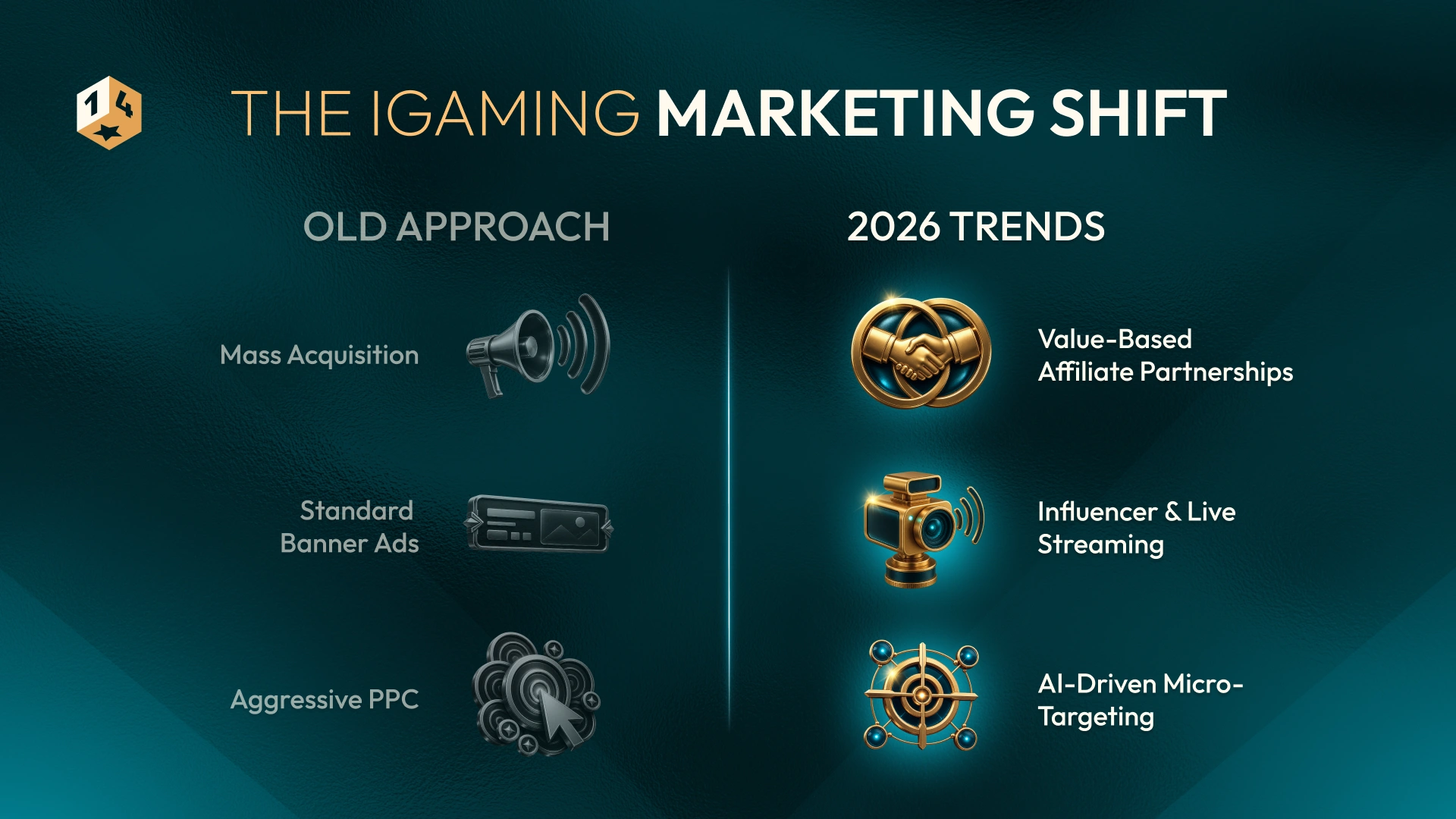
Traditionally, iGaming operators grouped their players based on broad demographics or actions. Their newsletters were split between high depositors and low depositors, as well as those likely to open emails and those unlikely; analytics were split between age groups, genders, and locations.
Modern iGaming analytics is all about personalization, and to truly personalize a service, you need to understand your audience.
Does a particular player prefer classic slots like Mystery Coin 243, are they more likely to play Hold and Win games like Classic Chilli Hold and Win, or do they spend all of their time on seasonal slots like Lucky Easter 27 Hold and Win? Understanding where each player fits is crucial for effective iGaming marketing.
Operators use machine learning and AI algorithms to study player behavior and engagement patterns. They know which players are more likely to join a particular promotion, and can tailor their offers accordingly.
For example, let’s compare traditional vs modern remarketing.
In the early days, a casino would run a single promotion and then target it to all of its players. Whether those players were likely to join or not wasn’t considered—everyone received the promotion, and the casino tracked total conversions.
Today, using data-driven predictive models, casinos can release several personalized offers to target each group—regular depositors, high rollers, small-stake players—and greatly increase the uptake.
Player engagement increases, player retention improves, and as data and AI do all of the work, the casino can simply monitor the results and reap the benefits.
Influencer and social media marketing
Recent restrictions on classic PPC platforms like Google and Meta mean that many iGaming companies have now turned to influencer marketing. Gambling companies sign deals with major content creators, who advertise online casino games and services to their players using live streaming.
The influencers sign up and play games, often using virtual credits or money supplied by the casino, and in doing so, they show their players what they can expect. It’s an excellent way to promote casino branding to specific demographics. However, the prevalence of underage gambling and users in restricted regions means brands must choose their influencers very carefully.
Regulators in Australia and other major markets have warned brands about this practice, making it clear that they are responsible for advertisements that influencers promote on their behalf.
With the popularity of YouTube, TikTok, and Twitch, influencer marketing can be an excellent way to promote services in newly regulated markets and increase player engagement, but it must be done sensibly and responsibly.
The role of AI search in modern SEO/GEO practices
ChatGPT has over 1 billion active monthly users, and combined with Gemini, Perplexity, and other AI-powered search engines, these searches constitute a significant portion of total daily volume. Traditional SEO can still be effective, but in today’s AI-driven world, GEO, or generative engine optimization, is just as important.
Quality remains king, as it does with SEO-oriented content, but there are other things to consider when ensuring a site shows in a search powered by AI:
- Demonstrate expertise: Post informed opinions, provide helpful advice, and ensure the content was written, edited, or checked by an expert in the field. It can be as long as it needs to be, but should always provide helpful, expert-backed advice or opinions.
- Include structured data: Structured data like schema markup will provide context to the AI engines that crawl your content.
- Mirror a user’s queries: Users ask questions, and AI gives them clear answers. The best content, therefore, mimics this process. It’s conversational and to the point. More importantly, it quickly answers a question asked in a header.
- Easy to read: Break up the content into readable chunks—headers, bullets, lists, and short paragraphs.
Affiliates and partnerships are more important than ever
Affiliates have also played a big role in the iGaming sector, and nothing has changed on that front. However, iGaming affiliate marketing trends in 2026 are focusing more on the importance of compliance, while high competition means many top programs have abandoned mainstays like negative carryover.
Casinos also use advanced attribution models to accurately and fairly reward their partners.
All affiliates must display responsible gambling messages and strictly abide by the rules of local regulators. To adapt, affiliates are focusing more on expert-led, localized pages, while operators are very selective in who they work with. They want quality traffic from trustworthy sites, and are more likely to favor a localized site that delivers modest but high-quality traffic than one that targets the grey market and does high numbers.
iGaming affiliate trends also include a shift toward high-value partnerships and endorsements. In 2026, we’ve seen A-list celebrities like Chris Rock, Drake, Jon Hamm, Kevin Hart, and countless others work closely with online betting and gaming brands, all with a view to improving the brand’s reputation, increasing its exposure, and adding a degree of credibility.
Alternative forms of advertisements used in iGaming
As iGaming trends move away from classic CPM and CPC models due to tightening regulations, many brands have switched to alternative ads to drive players to their websites:
- Programmatic advertising: An automated, data-driven system that buys and sells ads in real time, helping advertisers to get their brand seen by the right people, in the right spaces, and without long-winded manual negotiations.
- App and mobile gaming placements: Advertisers work with mobile game publishers to display ads throughout popular mobile games and in-app networks, including those with similar themes, such as social casinos and social games.
- Entertainment-driven ad formats: These ads seek to engage the user by offering a form of entertainment, usually through narrative, story-driven commercials, but also interactive games. They’re organic, engaging, and less intrusive than typical ads.
- Smarter placements: Operators are changing how and where their ads are seen to avoid frustrating the user. Dynamic interstitials are a prime example, as they’re full-screen ads that appear during natural breaks in app screens, page loads, and video streams. The user’s attention is engaged, whereas they may have their blinkers on for banner ads, pop-ups, and other traditional ad placements.
iGaming Technology Trends
Since the birth of the first slot machine and the video slot, very little changed. Decades passed, but these games were still simply made mechanical cabinets. Video slots introduced new concepts, but even then, it would be another few decades before the online gaming age, and that’s when we really began to see change.
Arguably, iGaming has developed more in the last decade than in the century before that. It is driven by technological advancements, and with greater computing power, better graphics chips, and the rapid evolution of AI, we’re currently in the middle of the greatest evolutionary period.
Technology is the main driving force behind change in this industry, and these are the biggest iGaming technology trends in 2026:
Personalizing and protecting with AI and ML
Machine learning (ML) and artificial intelligence (AI) collect, organize, and use vast datasets to perform functions that would have been impossible just a few years ago.
By studying player behavior, for example, machine learning programs can spot patterns of play that indicate fraud and money laundering. They can create specific player profiles for marketing and remarketing purposes, delivering measurable results that assist with everything from compliance to conversions.
AI-driven customer support provides round-the-clock live chat using chatbots, and as these bots learn from real conversations, they can mimic the professionalism and tone of your agents while delivering helpful and accurate support.
Operators also use AI to mitigate threats, verify player identities, and ensure regulatory compliance. For instance, it can immediately check a player’s details against public records, blacklists, and sanctions lists to confirm their identity and raise red flags.
Balancing the pros and cons of crypto and blockchain technology
Crypto and blockchain technology are behind many of the biggest iGaming technology trends in 2026. The speed and directness of crypto payments make them an almost perfect choice for the iGaming sector, while the security and verifiability of blockchain technology has led to it being used in provably fair games.
But crypto casinos face their own challenges.
Many of the apparent benefits of cryptocurrencies, including the pseudo-anonymity and lack of centralization, cause a compliance headache. How do you combine a technology favored for its lack of centralization and identifying information with an industry that requires every player to verify their name, contact details, address, and payment details?
It’s a challenge, but operators and regulators are steadily finding a balance.
A mobile-focused approach
Most modern casinos adopt a mobile-first approach, and that’s no surprise. Globally, over half of all internet users use smartphones, and that share is even greater if you focus on developed regions. In the United States, for example, nearly 60% of people access the internet using a mobile device.
The iGaming sector must cater to these players by creating mobile-focused games and specific mobile technologies that enhance the user experience. It’s why all 1spin4win games, from retro slots like Classic Chilli to bonus slots like Lucky and Brave Win Spins, are fully compatible with most mobile devices.
Cybersecurity, anti-fraud, and risk management
Security issues are a massive problem for the iGaming sector. A flaw could lead to a security incident, which in turn can damage the casino’s reputation, expose player data, and create various regulatory issues.
Hackers are using AI to power malicious attacks, including phishing schemes, but the same technology can also improve cybersecurity for the casino.
Real-time monitoring tools look for behavioral biometrics—telltale signs of fraud. They can check player identities against blacklists and sanction lists, while also strengthening responsible gambling protocols by looking for signs of problem gambling.
In addition, casinos are using blockchain technology to offer encrypted wallets and secure payment methods, all of which are backed by multi-factor authentication that makes it hard for unauthorized individuals to gain access.
Casinos aren’t just protecting their players and their reputations. As malicious attacks and money laundering become more common, regulators are increasingly demanding more from their licensees.
Complex data infrastructure to manage high traffic volumes
At any given time, an iGaming platform may be running hundreds of live casino games, offering thousands of slots, streaming dozens of live events on its sportsbook, and processing payments. It’s a high-traffic, high-bandwidth operation, and it requires complex data infrastructure.
iGaming sites use low-latency APIs to reduce the time it takes to send a request and receive a response, allowing for rapid, real-time results that are key to systems like live sports bets. They also use distributed servers to handle massive traffic loads and deal with surges during peak times.
Automated processes for optimum content delivery
As soon as a new player joins an online casino or betting site, the platform needs to verify their identity, run fraud checks, serve bonuses, process deposits, handle customer support, and coordinate tournaments, giveaways, and other promotions.
Most of these steps are managed by automated systems and third-party providers. Bonuses are served and paid automatically; payments are handled by payment processors, and many events are coordinated by gaming providers or white label service operators.
The biggest iGaming development trends for 2026
iGaming trends come and go, but the development side of things remains as detailed and thorough as ever. Every casino game undergoes research, analysis, design, implementation, testing, and compliance. Still, we’ve seen a shift in the sort of games that players seek, as well as how those games are structured.
Here are the latest iGaming development trends for 2026:
The 2026 iGaming trends in slot development
The slot game development process begins with an idea, which itself is based on industry research.
Developers study industry data and their own data to determine which slots and themes are popular at that particular moment. It could be sporting-themed slots like Lucky Goal, which tend to do well during World Cup years and other tournaments, or ancient Greek, Egyptian, or Roman slots like Lucky Legion Hold and Win, which have remained popular for years.
2026 iGaming trends have focused on once-obscure themes such as candy and fishing, as well as features that create dynamic base games—such as cluster pays, Megaways, and bonus buys—and incorporate elements of social gaming.
Popular games and features across major jurisdictions
For the most part, slot games are universal. If a game or theme works really well in one region, it will likely have a similar impact in another, as we’ve seen with the global popularity of Megaways features and certain Egyptian-themed slots.
But there are differences in how certain demographics perceive casino games.
Younger generations are more drawn to crash games, likely because they mimic the volatility of cryptocurrency markets and provide a sense of familiarity.
Mobile sports games are very popular in Europe and Africa. The former likely has something to do with the many top sports available in Europe, including the world’s biggest leagues. The latter is the result of a population more likely to have mobile devices than desktop machines.
E-sports betting is huge in the Asia-Pacific region, as well as the United Kingdom and the United States, and UK players are also big fans of online games with interactive elements, including live dealer games.
All slot developers have this information and can target specific demographics accordingly. Some are also combining different features to create hybrid games that appeal to a broader player base, such as slots with interactive elements or crash features.
The rise of the social casino
Social games are a unique breed of game born out of the increased interconnectivity provided by social media. These games encourage people to play together and compete against one another. Players can invite friends and family members and share coins, tips, and general chit-chat.
Social casino games don’t use real money, so they don’t face the same strict regulations as real money casinos. However, they can serve as a bridge to real money casinos, and by incorporating social elements into their real money games, developers are increasingly targeting the social crowd in 2026.
Turning casino games into video games
By offering customization options and progressive mechanics, slot developers are upping the ante in 2026 and gradually adding gamification features to their casino games.
Leaderboard promotions, challenge systems, loyalty schemes, and progressive bonuses are all now commonplace in online casinos in 2026. By improving player engagement, these setups enhance loyalty and increase the average player’s lifetime value.
AI-driven reward schemes
AI-guided personalization and localization strategies mean that iGaming casinos aren’t just casting a wide net and hoping for the best in 2026. They’re using data-driven, targeted reward schemes that tailor perks and bonus offers to the player’s location (governed by regulatory restrictions) and preferences (deposit size, deposit frequency, preferred games).
In 2026, iGaming rewards don’t need to be a one-size-fits-all solution. That still remains the case for many casinos, but others are carefully adapting to dynamic, AI-powered rewards.
How game providers have evolved from content creators to partners
To an iGaming operator, slot providers don’t just push out content and keep their game rooms full. They form meaningful partnerships that help operators enter new markets, deliver region-specific games, stay compliant, and support player retention.
Slot providers create compliant, carefully researched games with localized themes, popular features, advanced server performance, and responsible gambling layers.
Where 1spin4win fits into all of this
As a forward-thinking online slot provider, 1spin4win has a long list of exciting releases planned for 2026. We’ve done the research and studied the latest iGaming trends, and we’re ready for a big year with titles such as Lucky Hercules Hold and Win and Don Catleone Win Spins.
Summary: iGaming market trends
The 2026 iGaming trends that will make the biggest impact unsurprisingly revolve around AI. It has already changed the way people search, chat, and create, and it will definitely leave its mark on how casinos are built and run, and how games are researched and promoted.
For everything else, including advertising, affiliate partnerships, and regional expansion, it’s likely that regulators will have the biggest say. At the same time that countries like the UK and Australia are tightening their regulations, authorities in LatAm and North America are relaxing theirs.
One door hasn’t quite closed, but many more are definitely opening.
FAQs
How much is the online gambling market growing?
The compound annual growth rate (CAGR) for the global online gambling market is around 17%.
What drives the online gambling market?
Regulation is a key factor, with many countries now establishing legal online gambling infrastructure that allows operators to offer their services there.
What are the biggest iGaming trends in 2026?
AI-powered personalization, compliance, and even game development are undoubtedly the biggest trends for iGaming in 2026.
What are the biggest regions for iGaming?
Europe remains a powerhouse, but the United States is quickly catching up, and offers huge potential for experienced operators.
What iGaming trends can operators use to boost player engagement?
Operators can work with established slot providers that use data-driven analytics to create on-trend games backed by localization and customization options.
What’s the importance of following iGaming trends right now?
Following iGaming trends could lead to a notable improvement in major KPIs, including engagement rates and conversion rates.


notícias relacionadas
notícias relacionadas
últimas entrevistas


%20Main%20Banner%20560x350.webp)

.webp.webp)
Inscrever-se
Receba novos estudos de caso e relatórios diretamente na sua caixa de entrada

Opa! Algo deu errado ao enviar o formulário.
.webp)
.webp)
Inspire-se nos clássicos para tornar o seu negócio intemporal!
Crie slots personalizadas que reforçam o envolvimento e a retenção dos jogadores, bem como o reconhecimento da marca do seu casino