
Artículo
March 27, 2026
RNG en iGaming: qué es, cómo funciona y por qué es fiable


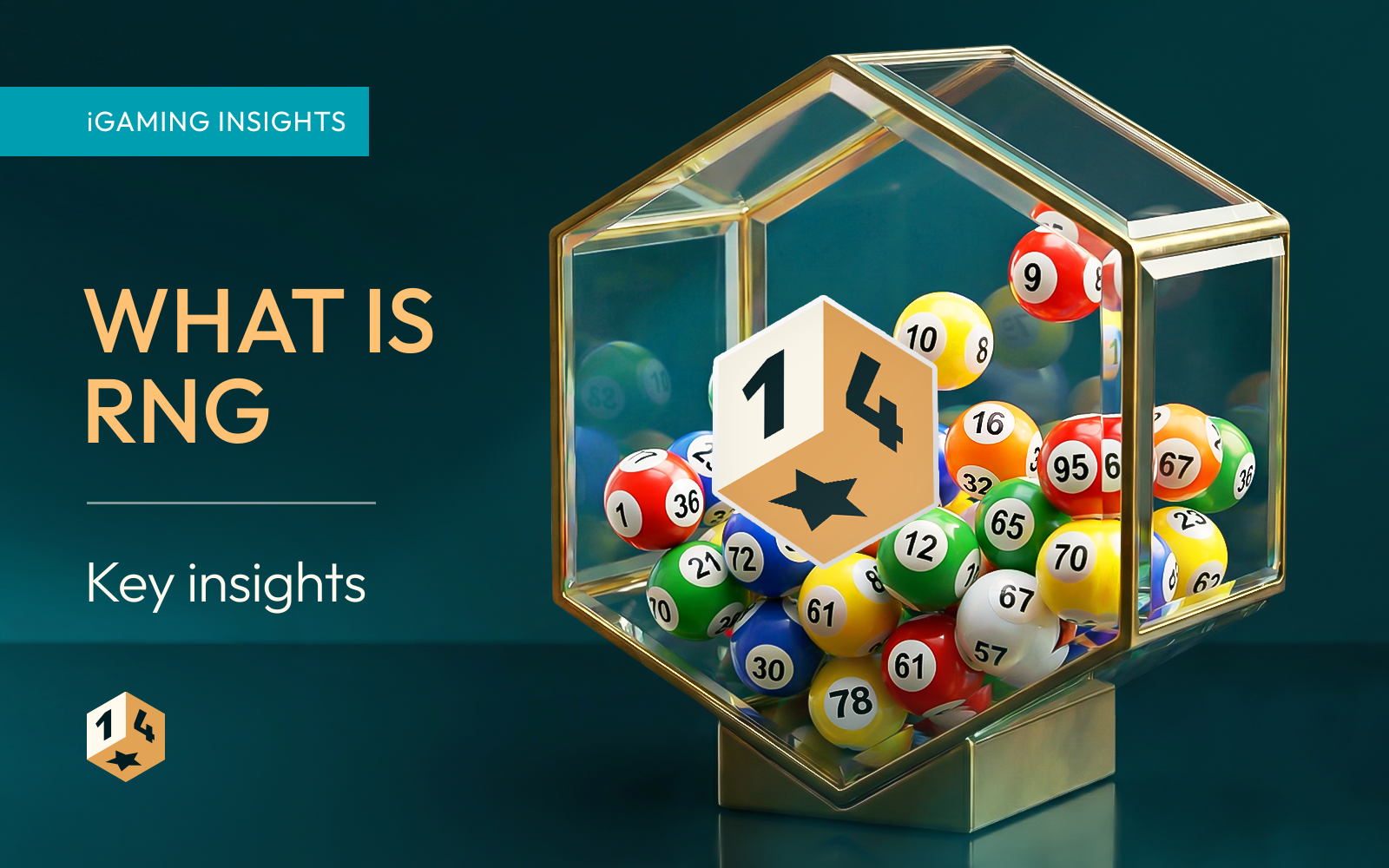
La mayoría de los juegos de casino online utilizan un generador de números aleatorios (RNG) para distribuir los resultados al azar y garantizar resultados justos e impredecibles en cada giro de las tragaperras y en cada turno de cartas. Podría decirse que un algoritmo de generación de números aleatorios totalmente funcional y certificado es la parte más importante de cualquier juego de casino.
Entonces, ¿qué es el RNG, cómo funciona y por qué es importante?
¿Qué es el RNG y por qué es tan importante?
El objetivo de las apuestas con RNG es crear una base justa que sea tan impredecible y aleatoria como girar una ruleta física o repartir una mano de cartas. El RNG funciona procesando un conjunto aleatorio de números basándose en un conjunto predeterminado de instrucciones.
Los desarrolladores deben probar y certificar los algoritmos de RNG mientras someten sus sistemas a auditorías periódicas. Como resultado, el software permanece seguro y el proceso se mantiene aleatorio, añadiendo un demostrablemente justo elemento que mejora la confianza de los jugadores.
Entonces, ¿qué es el RNG en iGaming? En pocas palabras, es algo que el jugador no siente, pero que sin duda echaría de menos si no estuviera allí, y es algo que constituye la columna vertebral de todo el sector de los juegos de azar en línea.
.webp)
¿Cómo funciona el RNG en términos sencillos?
Para entender cómo funcionan los juegos de casino RNG, podemos usar tragaperras online como ejemplo.
Una vez que el jugador pulsa «girar», un algoritmo de RNG se detiene en un conjunto aleatorio de números que determina el resultado. Determina dónde aparecerá cada símbolo, si formará un premio y si el juego generará premios o bonificaciones.
El algoritmo usa un código predeterminado para generar ese número, pero es aleatorio: el casino no puede influir en él y el jugador no puede predecirlo. Además, como cada resultado es independiente y no está influenciado por los resultados anteriores, los jugadores siempre obtienen un resultado justo.
Por lo tanto, si utilizamos una tragaperras simple de tres tambores como Cash'n Fruits 27 Por ejemplo, es como asignar cada resultado (ganar, ganar al máximo, perder, etc.) a un número del cero al nueve, tirar un puñado de dados cuando presionas «girar» y luego usar el último dígito del total para determinar el resultado.
Por supuesto, el algoritmo RNG actual de este y otros juegos de tragaperras es mucho más complejo, pero la idea es la misma: es una forma de garantizar un resultado aleatorio que no pueda manipularse por ningún lado.
El papel del HRNG: TRNG frente a PRNG
Es posible que haya escuchado que los juegos de casino no son realmente aleatorios. Es técnicamente cierto, pero también es muy engañoso.
Los juegos de casino RNG suelen utilizar algo conocido como generador de números pseudoaleatorios (PRNG). El término puede evocar imágenes de duendes en la máquina manipulando los resultados, pero en realidad solo significa que el RNG no es 100 % aleatorio, ya que depende de una entrada específica.
Las tragaperras RNG, por ejemplo, utilizan un algoritmo para procesar una secuencia de números aleatorios, pero alguien necesita programar ese algoritmo. No es predecible en el sentido de que un jugador, un casino o un desarrollador puedan predecir cada resultado, y permanece seguro y protegido en ese sentido. Sin embargo, tampoco es realmente aleatorio.
Los verdaderos generadores de números aleatorios (TRNG), por otro lado, utilizan fenómenos físicos para crear resultados verdaderamente aleatorios. En lugar de confiar en algoritmos programados, el desarrollador puede vincularlos a fenómenos como el comportamiento de los fotones.
Entonces, si un PRNG no es realmente aleatorio, ¿por qué lo usan los proveedores de juegos?
Bueno, hay varias razones:
• Velocidad: La mecánica del iGaming se basa en la velocidad y la fluidez y, dado que los TRNG utilizan modelos físicos lentos, suelen tener dificultades para mantenerse al día.
• Reproducibilidad: La imprevisibilidad de los TRNG significa que es imposible reproducir los resultados, lo que, a su vez, dificulta que los desarrolladores auditen sus sistemas.
• Certificación: Los RNG están sujetos a una regulación y certificación estrictas, por lo que los resultados deben ser reproducibles para apaciguar a los reguladores y garantizar el cumplimiento de la industria.
Algunos desarrolladores han recurrido a los generadores híbridos de números aleatorios (HRNG) para combinar lo mejor de ambos mundos. Por ejemplo, pueden usar un TRNG para generar un número «inicial» antes de que el PRNG tome el control. Es verdaderamente aleatorio, pero es más reproducible que el TRNG.
Cómo implementan los desarrolladores el RNG en las tragaperras
El RNG se integra en el código del juego para asignar un resultado impredecible a cada giro. Antes del lanzamiento, los desarrolladores simulan millones de partidas, verifican que la distribución de resultados coincide con el modelo matemático y someten el sistema a laboratorios independientes.
El algoritmo no decide si un jugador debe ganar o perder: selecciona un resultado aleatorio entre todas las combinaciones posibles. La tabla de pagos, el RTP y la volatilidad determinan después cómo se traduce ese resultado en premios.
Cómo funcionan los juegos basados en RNG en el sector de iGaming
Los desarrolladores de videojuegos usan RNG para aleatorizar el botín, y el sector de las criptomonedas lo usa para generar claves criptográficas, pero RNG iGaming es uno de los usos más importantes y extendidos de los algoritmos de RNG. Es la base de la equidad y la aleatoriedad, y determina los resultados en muchos tipos de juegos de casino.
Tipos de juegos que usan RNG
Para entender cómo funcionan los juegos basados en RNG en el sector de los casinos, considera los juegos con crupier en vivo frente a los juegos de mesa virtuales.
Un juego con crupier en vivo utiliza crupieres y equipos reales, por lo que las cartas barajadas, los giros de las ruedas y las giros de dados proporcionan la aleatoriedad necesaria, mientras que las reglas de las apuestas y los tableros de juego (como los espacios verdes de la ruleta) garantizan una ventaja fiable para la casa.
Los juegos de mesa virtuales son completamente digitales, sin la intervención del crupier. Por lo tanto, el software RNG debe generar todos los resultados del juego. Este software determina si el jugador consigue un blackjack natural, gana una apuesta de un solo número o consigue un golpe real.
El proceso es igual de aleatorio y, al anular los efectos de los errores y prácticas del crupier, como el conteo de cartas y la clasificación por bordes, el RNG produce resultados más confiables para el operador.
El RNG determina dónde aparecerán los símbolos en una tragaperras y qué cartas muestra el crupier en los juegos de bacará y blackjack virtuales, y también se usa en juegos casuales, juegos de lotería y más.
Por supuesto, los beneficios del RNG solo se aplican si el desarrollador sigue estrictos protocolos de certificación de RNG, por lo que las plataformas de casino deben asegurarse de asociarse con un proveedor de tragaperras con juegos RNG certificados.
.webp)
¿Los juegos con crupier en vivo usan RNG?
A menudo se dice que los juegos con crupier en vivo no usan ningún RNG, pero ese no es el caso de todos los juegos de casino en vivo.
En su mayor parte, los juegos con crupier en vivo funcionan como los casinos terrestres, y la aleatoriedad proviene del equipo y del crupiente/jugador. El crupier baraja las cartas en el blackjack y hace girar la rueda en la ruleta, mientras el jugador tira los dados en forma de dados. Sin embargo, la aparición de las tragaperras de casino en vivo, que funcionan como un cruce entre una tragaperras y un programa de juegos en vivo, ha supuesto un aumento de los modelos híbridos que combinan equipos y acciones reales con el RNG.
En términos generales, si el juego usa equipo real y el crupier se hace cargo, es probable que no haya ningún RNG involucrado. Si se centra en elementos digitales, como una gran cuadrícula de tragaperras, está utilizando RNG.
Los jugadores aceptan muy bien este hecho, ya que parece que los principales atractivos de los juegos de casino en vivo son los factores inmersivos y comunitarios, en contraposición a la ausencia de RNG. Hubo un tiempo en el que los jugadores desconfiaban de RNG y solo creían en lo que podían comprobar por sí mismos, pero la mayoría de los jugadores modernos comprenden los rigurosos procedimientos de prueba que se siguen tras el lanzamiento de cada juego, así como las severas sanciones que se imponen a los desarrolladores y operadores que no cumplen con las normas.
Cómo los resultados del RNG determinan los resultados del juego
Hemos dado el ejemplo de una tirada de dados y varios resultados básicos anteriormente, pero los juegos de casino online son mucho más complicados que eso.
En Fortuna afortunada y valiente, por ejemplo, los jugadores pueden revelar siete símbolos estándar en 243 formas de ganar y, al mismo tiempo, activar la función Hold and Win y dos jackpots. ¡Incluso La suerte mística aguanta y gana, que adopta una configuración clásica con tres carretes, todavía tiene ocho símbolos estándar, un Wild, jackpots y 27 líneas de pago.
Un sistema de RNG no solo determina si el jugador gana o pierde, sino que tiene en cuenta todos los diferentes elementos de las partidas y mapea sus posiciones y resultados.
El algoritmo RNG en las tragaperras online considera factores como:
• Los símbolos, las líneas de pago y las combinaciones ganadoras
• La frecuencia de los activadores de las bonificaciones
• El resultado de una función de giros gratis u otro juego de bonificación
• La probabilidad de que se active un premio mayor
• El rango y el palo de la siguiente carta en un minijuego de «doble o nada»
Los RNG no solo generan un número del uno al 10 cuando el jugador pulsa «girar». Realizan constantemente millones de cálculos, se detienen cuando el jugador interactúa y traducen ese número en un resultado según el algoritmo.
Como cada resultado es independiente, el juego no tiene en cuenta si el jugador ha ganado o perdido 10 partidos seguidos. Siempre tienen las mismas posibilidades de éxito.
Cómo garantizan los desarrolladores la seguridad y la equidad
Ya sea que se trate de una tragaperras gráficamente avanzada y con muchas funciones, como Lucky Arena: ¡Aguanta y gana! o un lanzamiento de inspiración retro como Campanas Lucky 5, cada tragaperras se somete a un proceso rígido de pruebas y certificación de varios pasos que garantiza que las apuestas con RNG sean tan aleatorias y justas como se anuncia.
El proceso de certificación RNG
Los desarrolladores implementan modelos matemáticos, pero los auditores los comprueban y certifican. Si un proveedor de tragaperras con licencia lanza un juego RNG, significa que el RNG ha sido certificado por organizaciones independientes aprobadas por los reguladores, como:
• eCOGRA: eCOGRA, uno de los mayores servicios de certificación, se lanzó en 2003 y cuenta con la aprobación de muchos reguladores, incluidos los del Reino Unido, Curazao, Malta y Alderney. Además de la certificación RNG, también ofrece otros servicios de iGaming, como la resolución de conflictos y la ciberseguridad.
• GLI: Los reguladores de más de 700 jurisdicciones mundiales confían en Gaming Labs International para proporcionar servicios de certificación, verificación y asesoramiento, lo que la convierte en una de las empresas de pruebas y certificación más importantes del sector.
• Laboratorios de pruebas de BMM: BMM Testlabs, una organización con una enorme influencia, ha estado ofreciendo servicios de cumplimiento normativo desde 1981 y ha sido pionera en numerosos estándares de juegos en línea.
• Laboratorios iTech: iTech Labs, con sede en Bulgaria, ofrece servicios de certificación, incluida la certificación RNG, a desarrolladores y operadores de los principales mercados regulados de Europa.
• PRUEBA: TST se unió al grupo GLI en 2010 y proporciona certificación RNG, auditorías de seguridad y evaluaciones de modelos matemáticos a empresas de todo el sector de los juegos de azar en línea.
El proveedor de tragaperras no controla sus propios sistemas. En su lugar, desarrolla el RNG según estándares específicos y exigentes, comprueba que es completamente funcional y, a continuación, busca la certificación RNG. Cada RNG, cada juego y cada resultado se revisan meticulosamente antes de que el desarrollador lance el juego, lo que garantiza los niveles más altos de seguridad, equidad y aleatoriedad en todas las apuestas con RNG.
El proceso de certificación RNG para los juegos de casino online varía, pero por lo general se parece a esto:
• Revisión del código fuente: El laboratorio revisa el código fuente de los juegos de casino RNG para garantizar que se implemente correctamente y cumpla con los estándares de la industria. Comprobarán que el algoritmo es correcto y cumple con los estándares actuales de la industria.
• Análisis de resultados: Realiza una serie de pruebas para comprobar la producción de RNG en muchos resultados. Luego, los resultados se analizan para comprobar la aleatoriedad, y el laboratorio busca patrones predecibles que sugieran la ausencia de una verdadera aleatoriedad.
• Verificación de semillas: El valor inicial es crucial para el rendimiento y la aleatoriedad de un RNG, por lo que el auditor comprobará cómo se genera y confirmará que el proceso y el resultado son impredecibles.
• Controles de seguridad: El laboratorio confirma que el algoritmo RNG no es susceptible a los ataques y que los jugadores no pueden influir ni predecir el resultado.
• Auditorías periódicas: Tras las comprobaciones y certificaciones iniciales, el auditor puede realizar comprobaciones periódicas para confirmar que los resultados son coherentes y que el software sigue siendo aleatorio y seguro.
Certificación del RNG de un casino: por qué es necesaria
La certificación demuestra que el generador produce resultados aleatorios, independientes y acordes con el RTP declarado. Los reguladores exigen pruebas de laboratorios autorizados y auditorías periódicas para proteger a los jugadores y mantener la integridad del mercado.
Regulaciones, seguridad y riesgos de incumplimiento
Antes de que estén disponibles en ciertas jurisdicciones, los juegos de casino RNG deben estar certificados por empresas de pruebas aprobadas por los reguladores, pero el cumplimiento no termina ahí. Los desarrolladores y operadores deben demostrar que sus juegos siguen cumpliendo con las regulaciones y que siguen siendo justos, aleatorios y seguros.
En caso de incumplimiento, los reguladores del juego pueden iniciar una revisión, que puede llevar a todo tipo de cosas, desde una advertencia formal hasta la suspensión de la licencia. Por lo tanto, es imprescindible que los operadores trabajen con desarrolladores de iGaming de confianza, que se comprometan plenamente con el cumplimiento del RNG y cumplan con los requisitos de todas las jurisdicciones pertinentes.
Los casinos también recurren cada vez más a las auditorías de terceros para proporcionar niveles adicionales de cumplimiento, seguridad y equidad, ya que los jugadores modernos ven los sellos de certificación de terceros como una señal de confianza.
Si bien es común ver multas y suspensiones relacionadas con el incumplimiento de las regulaciones AML/KYC, las sanciones por incumplimiento de las regulaciones de RNG son extremadamente raras. Pero eso tiene más que ver con el meticuloso ciclo de desarrollo y con la participación de terceros que con la negligencia normativa.
RNG y RTP: conceptos relacionados, pero diferentes
Hay la misma cantidad de jugadores que buscan «¿qué es el RTP?» ya que hay «¿qué es el RNG?» , y desafortunadamente, parece que muchos principiantes tratan estas abreviaturas como si fueran sinónimos entre sí.
De hecho, son muy diferentes, pero igualmente importantes y están estrechamente relacionados.
El retorno al jugador (RTP) es una medida del éxito del jugador. Expresado como un porcentaje, calcula el rendimiento promedio durante una sesión prolongada. Tras desarrollar una tragaperras e implementar un RNG, un proveedor de iGaming realizará una serie de juegos de prueba y, en el caso de las tragaperras, esa cifra suele ascender a millones.
Ellos restarán el total de ganancias del jugador del total de las apuestas para obtener el RTP. Para simplificar las cosas, supongamos que un desarrollador hace 1000 giros a 1$ cada una y recibe 960$. Esto significa que el 96 % de las apuestas se devolvieron al jugador y ese 96 % se convierte en el RTP.
El RTP promedio se sitúa en torno al 95-96 %, pero a medida que los jugadores van tomando conciencia de esta métrica, buscan cada vez más juegos con un RTP más alto, por lo que 1spin4win publica tantos títulos que superan el 97 %, entre ellos Miel de la suerte (97,2 %), Lucky Easter 27 Hold & Win (97,1 %), y Giros en auge 243 (97,25 %).
En esencia, el RNG crea la aleatoriedad, mientras que el RTP mide su salida.
Mitos, malentendidos y conceptos erróneos comunes sobre los RNG
Para cada jugador que busque términos como «¿qué es el RNG?» Además de aprender los conceptos básicos de la distribución aleatoria de iGaming, hay una docena de personas que preguntan a Google sobre las tragaperras frías y calientes, cuál es el mejor momento para jugar y cómo superar a un generador de números aleatorios.
La claridad es clave, y los casinos deben hacer todo lo posible para educar a sus jugadores. Algunos de los mitos más comunes que hay que disipar son:
Tragaperras calientes y tragaperras frías
Esta es la idea de que algunas tragaperras están «de moda» y actualmente pagan mucho dinero, mientras que otras son «frías» y no pagan nada. Sin embargo, cada tirada se produce de forma independiente de la anterior, por lo que si una tragaperras tiene una racha de 10 victorias o derrotas, se trata de una coincidencia y no afecta a las giros futuras.
¿Se puede vencer al RNG?
Como se indicó anteriormente, los juegos de casino se someten a pruebas estrictas por parte de desarrolladores y auditores independientes. Parte de ese proceso consiste en comprobar que el RNG sea aleatorio, impredecible y no sea susceptible de hackeos o exploits. Es aleatorio y los jugadores no pueden vencerlo con habilidad, paciencia, conocimiento o hazañas.
El «gran interruptor rojo»
Lee las reseñas de cualquier casino y encontrarás una serie de comentarios negativos que se quejan de que el casino está manipulado en su contra y de que ha activado un interruptor para impedir que ganen. Por supuesto, este cambio no existe y, aunque los jugadores siempre reaccionarán de forma negativa ante las rachas perdedoras, educarlos sobre el proceso de implementación y certificación del RNG puede disipar algunas de sus creencias.
Los juegos de casino en vivo son más justos
Algunos jugadores tienen una desconfianza inherente hacia los juegos de mesa RNG y necesitan ver la acción para creerlo. Pero todos los títulos de iGaming se someten a pruebas estrictas, y los juegos de casino de RNG son tan aleatorios y tan justos como los juegos con crupier en vivo.
La conexión vital entre el RNG y el juego responsable
Los reguladores adoptan una postura estricta sobre el juego responsable y, a medida que aumentan las preocupaciones, las regulaciones se endurecen y hacen más hincapié en la responsabilidad y la rendición de cuentas de los operadores.
El RNG es clave en este proceso. Es imperativo que los casinos eduquen a sus jugadores sobre cómo funcionan los RNG para desalentar el comportamiento irresponsable.
Perseguir las pérdidas es un buen ejemplo, ya que es una de las primeras señales de problemas con el juego y puede tener un efecto catastrófico en los fondos de un jugador. Se produce cuando los jugadores pierden grandes sumas de dinero y luego apuestan más dinero y durante períodos más prolongados de lo previsto para intentar recuperarlo. A menudo, la creencia de que el juego les «debe» una victoria impulsa sus acciones.
Después de todo, si invierten grandes sumas en una tragaperras y pierden, pueden pensar que es para ganar y seguir jugando. Si saben que cada tirada es independiente, estarán más inclinados a tomarse un descanso.
La educación también reduce el comportamiento emocional e impulsivo. Algunos jugadores pueden empezar a pensar que el destino está conspirando en su contra, pero eventualmente se volverán a su favor. Es posible que crean que solo tienen que persistir, a menudo porque no entienden el RTP y piensan que se aplica a todas las sesiones de juego y no a millones de giros de prueba.
De cualquier manera, al informar a los jugadores sobre la realidad de los juegos de azar en línea y asegurarse de que conocen los algoritmos que rigen los resultados, un casino puede fomentar el juego responsable, evitar el reproche regulatorio y cumplir con las normas.
Conclusiones clave
El acrónimo RNG significa «generador de números aleatorios» y se refiere a un algoritmo que crea resultados aleatorios y justos en juegos de tragaperras como Golden Joker Fortune y La fortuna patrimonial de Buffalo, así como otros juegos de casino online.
Los desarrolladores utilizan tecnologías avanzadas de RNG que generan constantemente secuencias numéricas, se detienen cuando comienza el juego y, a continuación, asignan los números resultantes a un resultado específico.
Ese resultado es aleatorio e impredecible, lo que resulta en juegos seguros para el casino y juegos justos para el jugador.
Preguntas frecuentes
¿Qué es el RNG en los juegos de casino online?
Los juegos de casino RNG utilizan algoritmos complejos y certificados diseñados para producir resultados aleatorios que garantizan resultados impredecibles. La mayoría de los juegos de casino se basan en RNG, con la excepción de muchos títulos de casino en vivo, que se basan en equipos reales y crupieres para simular la acción de un casino físico.
¿Cuál es la diferencia entre TRNG y PRNG?
TRNG es un generador de números aleatorios «verdaderos» que genera resultados basados en fenómenos físicos impredecibles, garantizando que cada aspecto sea completamente aleatorio. Un generador de números pseudoaleatorios (PRNG) sigue siendo aleatorio e impredecible, pero requiere un algoritmo programado que genere resultados.
¿Pueden los jugadores ganar un juego de casino RNG?
No, los juegos de casino RNG producen resultados impredecibles. Los jugadores no pueden predecir los resultados y superar un RNG de forma constante, aunque pueden tener una buena racha y recibir un pago considerable.
¿En qué se diferencia el RNG del RTP?
Un generador de números aleatorios (RNG) es un algoritmo que aleatoriza los resultados; el retorno al jugador (RTP) determina la cantidad promedio que un juego paga a los jugadores durante una sesión prolongada.
¿Las plataformas de iGaming prueban los algoritmos de RNG?
Sí, realizan rigurosas pruebas internas y también deben certificar su RNG con organizaciones de pruebas independientes y aprobadas.


noticias similares
noticias similares
últimas entrevistas

.png)
.webp)

.webp.webp)
Suscríbase
Reciba nuevos estudios de casos e informes directamente en su bandeja de entrada

¡Uy! Algo salió mal al enviar el formulario.
.webp)
.webp)
¡Inspírate en los clásicos para que tu negocio sea atemporal!
Crea tragamonedas personalizadas que fortalezcan la participación y retención de los jugadores, así como el reconocimiento de tu marca de casino