

Аrticle
November 17, 2026
How do online slots work? A guide to RNG, reels, and payouts


To understand how online slots work, the core process comes down to three elements: a Random Number Generator (RNG) generates a digital result the moment you press spin, the reels display that outcome visually, and the game's math model calculates the payout. If you have ever wondered how online slot games work behind the graphics, every round follows defined mathematics, RTP principles, and independent spin outcomes.
What are online slots, and how are they different from land-based machines?
Online slots are digital games that reproduce the basic idea of a slot machine through software. Instead of physical reels, they use virtual reels, symbols, and game logic displayed on a screen.
A land-based machine can use physical reels, electronic components, or both. An online slot handles the same job through software, allowing more varied layouts and game rules.
Modern video slots might use a 5×3 grid with 243 ways to win. Others could use fixed paylines, a large grid with Cluster Pays, or a changing number of symbols on each reel. The visual theme can be almost anything, from classic fruit symbols to adventure, fantasy, or branded concepts.
The software also controls features that would be difficult to reproduce on a traditional machine. Free Spins, Wild symbols, Scatter symbols, Multipliers, cascading wins, and Hold and Win rounds can all be built into the same game.
Slot machines usually show the paytable, RTP, volatility, bet limits, and feature rules on screen. Some titles also offer demo mode, so players can learn the mechanics before playing with real money.
For a closer comparison, see our guide to online slots vs traditional slots.
How do online slots work: what happens on every spin
To understand how online slots work in practice, choosing a bet sets the sequence in motion:
- Set the stake: you choose the amount wagered.
- Start the spin: the software begins a new round.
- Generate the result: the RNG determines the outcome within the math model.
- Display symbols: virtual reels stop in their final positions.
- Check for wins: the game evaluates paylines, ways to win, or clusters.
- Calculate payout: winning combinations are credited to your balance.
- Trigger features: certain outcomes launch Free Spins or Bonus rounds.
This cycle highlights the core reality of how online slots work: every round operates through independent spins, meaning previous wins or losses do not determine what happens on the next spin.
Random number generator (RNG): the engine behind every spin
The random number generator produces random game outcomes for every spin. Every online slot RNG works with the game's underlying mathematical design to generate random results.
In regulated markets, there are strict testing requirements around RNG-driven games. In Great Britain, for example, the Gambling Commission requires online gambling games to be tested by an approved test house before release. The question “Are online slots random?” is closely linked to how RNGs are tested. In Great Britain, regulatory guidance on fair online gambling games explains how independent testing and monitoring help ensure games work as intended.
Players can easily fall into the trap of watching the reels as if the visual movement dictates the win. In reality, the graphics are part of the visual presentation. When a spin is initiated, the RNG determines the outcome before the reel animation finishes. The spinning reels, sound effects, and visual animations are part of the presentation. They show the result to the player rather than determining it.
Slot mechanics: the key elements of an online slot
A typical slot has several parts working together. The reels and symbols create the playing area, while the win system and paytable determine how winning combinations turn into payouts. These are the basic online slot mechanics behind most games, while slot game features such as Free Spins, Wilds, and Bonus rounds add another layer to the experience.
Reels, rows, and symbols
The grid is the visible playing area where the reels and symbols appear. A common video slot uses five reels and three rows, giving a 5×3 layout. Other games use four rows, larger grids, or changing reel sizes.
Behind the graphics, each reel contains possible symbol positions defined by the game. The math model controls how those positions contribute to the possible results and which winning combinations can be formed.
Symbols usually fall into a few familiar groups:
- Regular symbols: these form the basic combinations in the game.
- Premium symbols: these usually have higher payout values.
- Wild symbols: these can substitute for selected symbols according to the game's rules.
- Scatter symbols: these can trigger features or pay separately from standard winning lines.
- Special symbols: these may collect values, add Multipliers, or start a Bonus round.
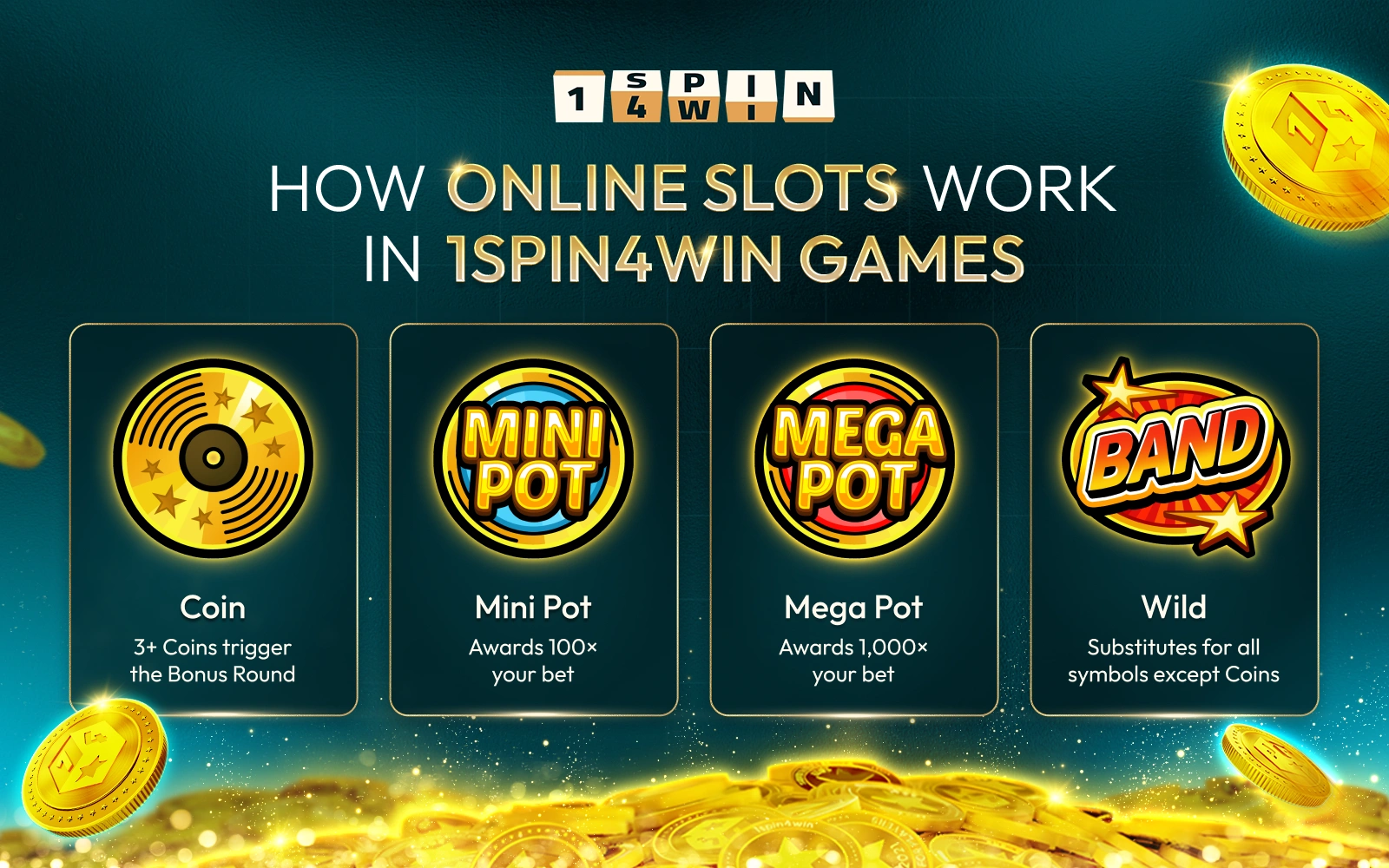
A Wild may substitute for every regular symbol or only selected ones, depending on the game. A Scatter may trigger Free Spins, award a payout, or do both.
The paytable explains the exact role of each symbol and shows which combinations qualify for a payout.
For a closer look at how different reel formats work, see our guide to video slots.
How slot win systems work
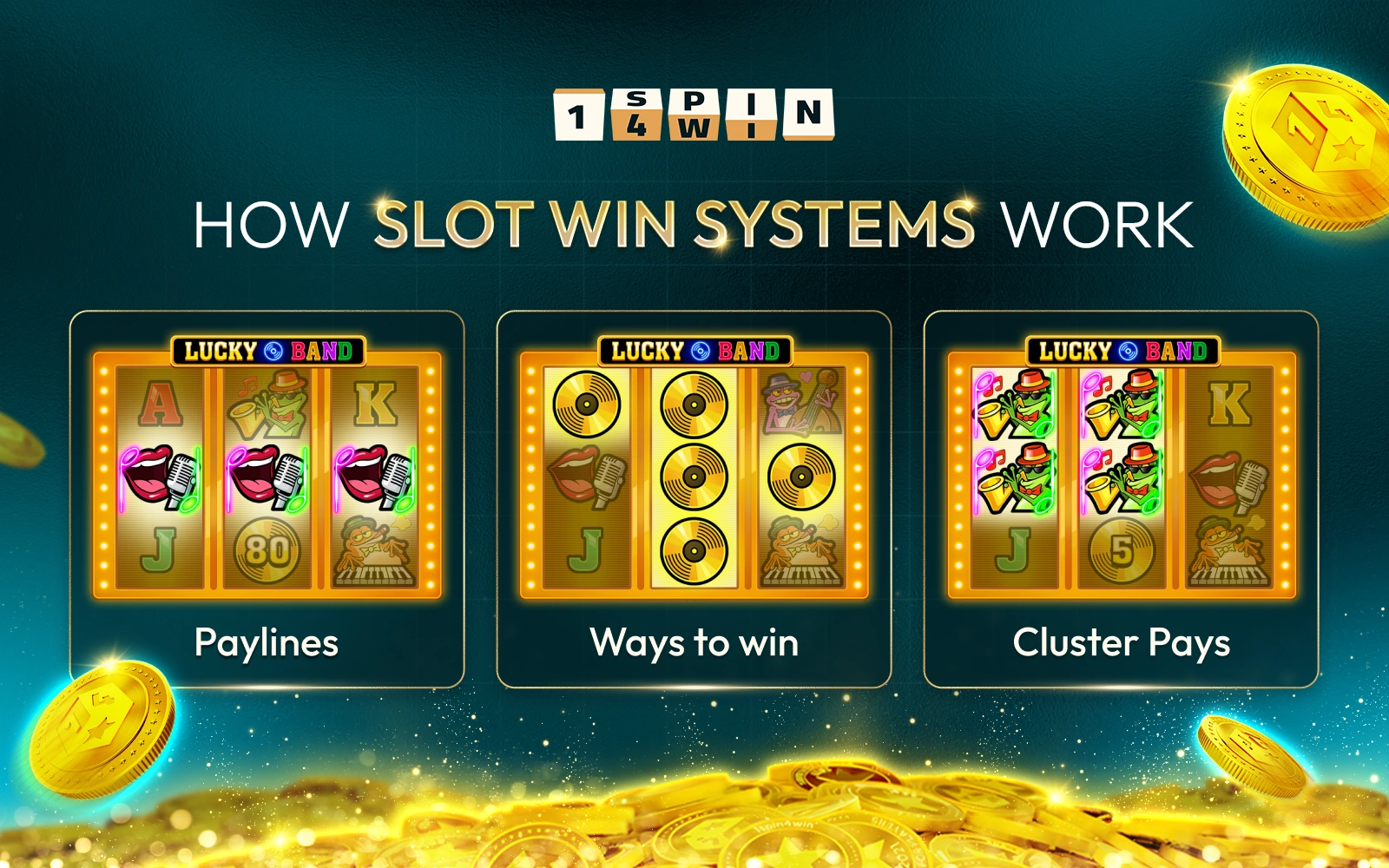
The game's win system decides how matching symbols are connected to a payout. Online slot paylines are one way this can happen, alongside ways to win and Cluster Pays.
Fixed paylines require symbols to land along predefined lines across the reels.
Ways to win remove some of that visual restriction. A 243-ways game can count several symbol positions across consecutive reels without requiring the symbols to follow one exact line.
Cluster Pays uses a different idea again. Instead of following a line, the game searches for groups of matching symbols that touch each other. Some games remove those symbols afterward and let new ones fall into the empty spaces.
Our guide to slot machine paylines covers the main formats in more detail.
Understanding the paytable and bet size
The paytable is effectively the rulebook for the slot. It shows the value of symbols and explains how the main features work.
It is also where players can check details that are easy to miss, such as the number of symbols needed to trigger Free Spins, the behavior of a Wild, the value of Coins, and the conditions for a Bonus round.
Three terms are particularly useful:
- Denomination: the value assigned to each coin or credit.
- Bet size: the amount wagered on a spin.
- Payout calculation: the method used to turn a qualifying result into a payout.
Imagine a game where a combination pays x50 the total stake. With a €2 stake, that would mean a €100 payout.
Increasing the stake changes the monetary value of a winning combination, while the underlying game mathematics remain the same.
Maximum win information can also appear in the paytable or game details. This gives the player a stated upper limit for the game's payout structure, where one is provided.
Bonus features and symbols in online slots
Bonus features give a slot another layer beyond the standard reel spin. They can change the number of spins, add new symbols, or move the player into a separate round with its own rules. These Bonus rounds can include Free Spins, Wild symbols, Multipliers or mechanics such as Hold and Win.
Some of the most common mechanics are:
- Free Spins: a set number of additional spins played under the feature's conditions.
- Wild symbols: symbols that can replace selected symbols when forming a win.
- Scatter symbols: symbols that can trigger features or provide separate payouts.
- Multipliers: values such as x2, x3, or x4 that increase an eligible payout.
- Respins: extra spins provided by a feature.
- Cascades: winning symbols disappear, and new symbols fill the empty spaces.
- Hold and Win: a feature built around special Coins and a limited number of respins.
Hold and Win can work differently from the base game. A set number of Coins may trigger the feature, with Coins staying in place during respins and new Coins extending the feature according to the rules. Getting this balance right is one of the trickier parts of designing the feature: too many respins can slow the round, while too few can make the feature feel limited.
Lucky Legion Fortune from 1spin4win uses this type of setup through its Hold and Take mechanic. Three or more golden Coin symbols trigger the Bonus round, locking in place for dedicated respins while offering cumulative cash prizes, fixed Jackpots, and a maximum win potential of up to x1500.
For more background on the development side of these mechanics, see our guide to slot game development.
RTP (Return to Player) and the House Edge
RTP, or Return to Player, is one of the most commonly misunderstood metrics in iGaming. On paper, a slot with a 96% RTP indicates a theoretical return of €96 for every €100 wagered, leaving the remaining 4% as the mathematical house edge. But that percentage is calculated over a sufficiently large number of spins. In a short session, the return can be far below or above the stated RTP because short-term results vary widely.
RTP describes a theoretical long-term return. It is not a prediction of what one player will win in a single session.
The Gambling Commission describes RTP as a long-term measure and warns against treating it as a prediction of an individual playing session.
RTP can vary between configurations of the same game, so always check the figure listed for the exact version you're playing. Even a small difference, such as 96.1% versus 97.1%, can matter over a large number of spins. The current 1spin4win portfolio lists 97.1% for Frozen Coins 243, 97.1% for Very Lucky 27 Hold and Win, and 97.2% for Lucky Legion Fortune. For a fuller explanation, see the Gambling Commission's online slots RTP explained guide.
Volatility and hit frequency
Online slot volatility describes how a game's payouts are distributed over time. It is closely related to variance, while hit frequency and payout frequency describe how often winning results occur under the game's rules.
A low-volatility slot generally has a payout pattern built around more frequent, smaller results. A high-volatility slot can have larger gaps between meaningful payouts, with bigger potential results in the game's upper range. Medium volatility falls between those two broad profiles.
Hit frequency adds another layer. A game can record a large number of small hits while still producing relatively few substantial wins. Payout frequency is related, but the exact definition can vary between providers, so the game's own information should always be checked.
Volatility describes the shape of a game's payouts, while hit frequency describes how often the game records a hit.
That distinction is easy to overlook. Suppose a player stakes €1 and receives €0.40 from a winning combination. The game has produced a hit, but the result is still below the original stake.
1spin4win lists both volatility and mathematical profiles on individual game pages. For example, Frozen Coins 243 and Lucky Legion Fortune feature medium volatility profiles, whereas Very Lucky 27 Hold and Win leans into high volatility for a more volatile payout distribution.
The exact meaning and presentation of hit rate should always be read alongside the provider's game information, since providers can use different terminology and measures.
How to choose and play an online slot
Before playing, it helps to understand how an online slot works and check the information provided with the game. The paytable shows the symbol values, winning combinations, and feature rules, while demo mode, when available, lets players learn the controls without using real money.
A practical checklist looks like this:
- Check the license and operator: use a licensed online casino that is authorised to offer gambling services where you live.
- Open the game information: look at the reel layout and win system.
- Read the paytable: check symbol values and the rules for Wilds, Scatters, and other features.
- Check the RTP: treat it as a long-term mathematical measure.
- Look at volatility: this gives some context for the game's payout distribution.
- Check the bet range: make sure the available stake fits your budget.
- Try demo mode: if available, use it to learn the controls and features before playing for real money.
- Set a spending limit: decide how much you are willing to spend before you start.
Betting after a losing run or waiting for a particular time of day cannot control the game's outcome. Chasing losses by increasing the stake only increases the amount at risk.
Setting a spending limit is a practical part of responsible gambling. Decide the limit before the session starts, rather than changing it after losses.
Players looking for more information on staking approaches can also read the online slots strategy guide.
Different types of online slots
There is no single format that covers every online slot. Games range from simple three-reel classics to large grid games with several interacting features.
Classic slots use a simple reel layout and familiar symbols such as fruits, bells, and sevens. They usually have fewer features than newer video slots.
Video slots cover a much wider range. They may combine Free Spins, Wilds, Bonus rounds, and several other mechanics in one title.
Ways-to-win games focus on reel combinations instead of fixed visual lines. Cluster Pays games go further by replacing lines with groups of connected symbols.
Megaways games use changing reel heights, so the number of ways to win can change each spin.
For readers interested in the older style of slot, our classic slot games guide looks at the format in more detail.
How online slots work in 1spin4win games
Looking at real online slot games makes the mechanics easier to compare. The three titles below come from the same slot provider 1spin4win, but use different layouts and features while following the same basic structure of RNG, symbols, a win system, and a defined game math model.
Frozen Coins 243 uses a standard 5×3 layout with 243 ways to win, alongside a coin-focused feature and Bonus Spins. The game has medium volatility.
Very Lucky 27 Hold and Win uses a compact 3×3 setup with 27 paylines. The game has high volatility and includes Wild symbols, a ×2 full-grid Multiplier, and a classic Hold and Win slots feature with fixed Jackpots.
Lucky Legion Fortune expands on the 5×3, 243-ways layout using the Hold and Take mechanic. During the Bonus round, Coin values combine into one reward, with the chance to claim a ×100 Mini or ×1000 Mega Jackpot Coin. The game has a maximum win of ×1500.
The 1spin4win game portfolio includes other formats and mechanics, with individual game pages providing the current specifications.
The useful comparison here is the structure, rather than which number is higher. The games use different win systems and features, even when some of their headline figures are similar.
Myths and truths about how online slots work
Our human brains are naturally wired to look for patterns, even in systems built strictly around random outcomes. When a game hasn't paid out in an hour, it’s tempting to feel a win is “due”. In slot mechanics, however, all game rounds operate as completely independent spins. The math model has no memory, meaning a previous loss or Jackpot has zero influence on what lands next.
The idea of a “due” win is probably the most persistent myth. After a long run of losses, it is tempting to see the next spin as a correction. The RNG has no reason to follow that story.
The same applies to RTP: it describes a long-term average, not a single session. The paytable and game information are more useful than trying to read a sequence of previous spins.
Conclusion
Understanding how online slots work comes down to the relationship between a random number generator and a predefined game structure. The basics are straightforward: the RNG produces the outcome, while reels, symbols, and the chosen win system determine how that result appears visually. The paytable then connects qualifying combinations to their respective payouts.
RTP, volatility, and hit frequency add context to the game's underlying mathematics. Features such as Free Spins, Multipliers, and Hold and Win rounds make individual titles distinct, but they all operate within this same fundamental framework.
At 1spin4win, you can compare the current selection and check the individual game specifications on the online slot games page.
FAQ
Can I win real money playing online slots?
Yes. Real money slots can produce payouts when a qualifying result occurs. The amount and frequency of wins depend on the game's rules and mathematics, while availability depends on the laws and license requirements in the player's location.
Are online slots rigged, or are they fair?
In regulated markets, licensed online slots are subject to testing: outcomes come from a random number generator (RNG) working within the game's tested math model. In regulated markets like Great Britain, games must pass independent game testing by an approved test house before release.
Do online slots work the same way as land-based slot machines?
Both use random outcomes to determine results, but online slots run on software rather than physical reels. This allows more varied layouts, faster rounds, and features such as Free Spins or Cluster Pays that are harder to reproduce mechanically.
Does RTP tell me how much I will win?
RTP describes the theoretical long-term return built into a game's mathematics. It helps compare configurations, but cannot predict one spin or a short session.


similar news
similar news
latest interviews


Subscribe
Get new case studies and reports directly to your inbox

Oops! Something went wrong while submitting the form.


Draw inspiration from classics to make your business timeless!


